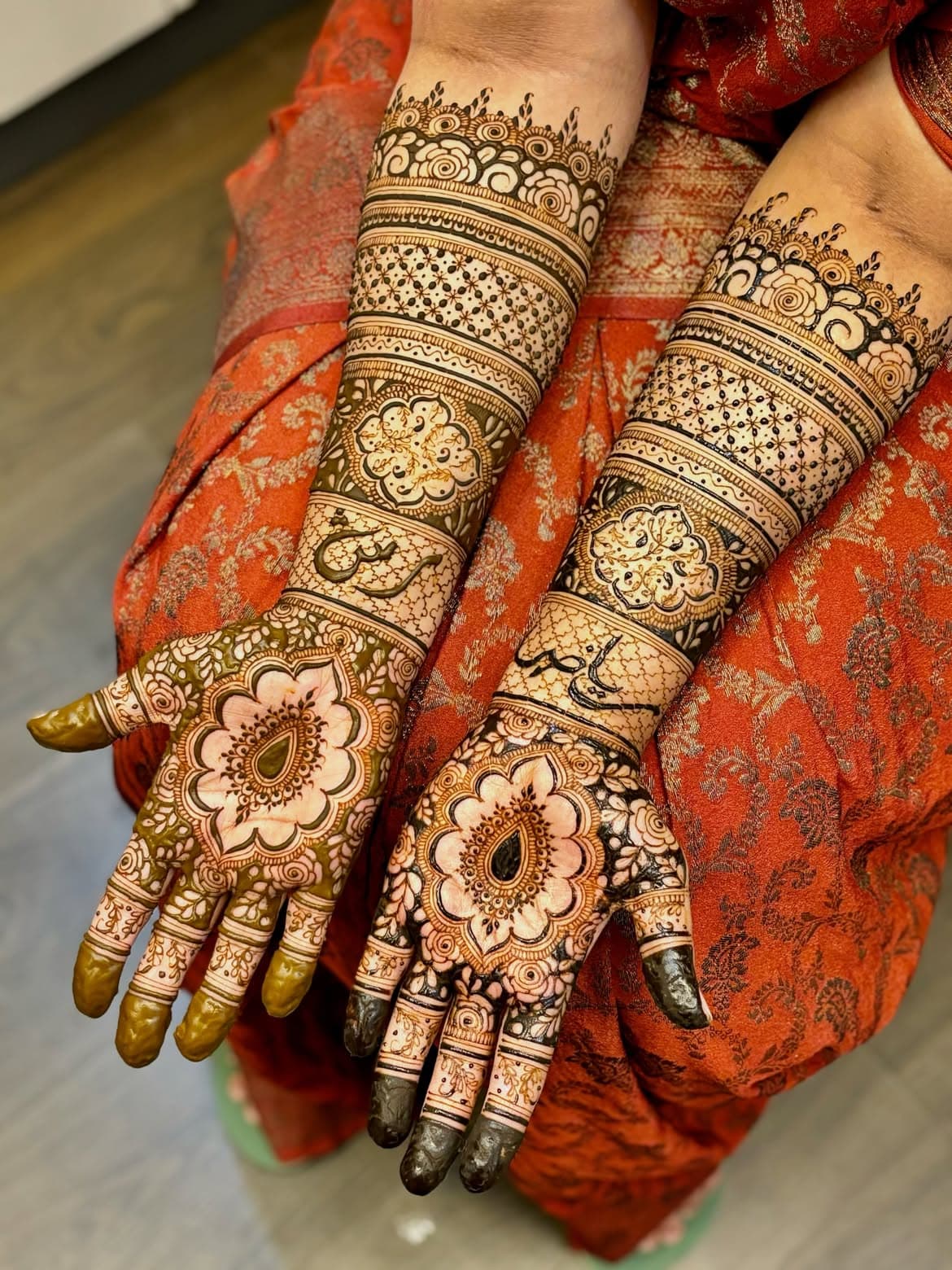


Your bridal mehndi will be in almost every close-up photograph, from the haldi to the reception. Choosing a design is about more than picking the prettiest picture: it should suit your hands, your outfit, how much time you have and how you want it to look when the stain is at its darkest.
The main styles
Traditional Indian
Dense, detailed designs that cover the hands and arms, often with peacocks, paisleys, lotus flowers, a doli or a kalash. Rajasthani-style designs are especially intricate. They take the longest to apply and look richest once fully stained.
Arabic
Bold, flowing floral trails with more empty space between the patterns. Arabic designs are quicker to apply and look elegant and modern, which makes them popular for brides who prefer a lighter look.
Indo-Arabic
A blend of the two: the flowing shapes of Arabic designs filled with traditional detail. A good choice if you want something intricate but not completely covered.
Minimal and modern
Finger caps, a single mandala on the palm, fine geometric lines or delicate bracelet patterns. Ideal for brides who prefer a subtle look, or for the second and third functions.
Figurative and story designs
Portraits of the bride and groom, scenes from your story, the place you met, your pet, or a city skyline. These need a skilled artist and more time, so book early and ask to see similar work.
Adding personal touches
- The groom's name or initials hidden in the design, for him to find later
- Your wedding date, or a word that matters to both of you
- Motifs from both families' traditions
- A small symbol that represents your story together
Keep personal elements to a few. Too many small details can blur together once the stain darkens.
How much coverage?
Bridal mehndi can stop at the wrists, go halfway up the forearm or reach the elbows, with matching designs on the feet. More coverage looks dramatic but takes much longer: full bridal hands and feet can take four to six hours or more. Think about your sleeve length and how much of your arms will show in your outfit.
Designs that stain well
Very fine lines packed closely together can merge into one dark patch as the colour develops. Ask your artist to leave a little breathing space in the most detailed areas so the pattern stays clear in photographs.
What to ask your mehndi artist
- Can I see photos of brides' hands a day or two later, not just fresh designs?
- What is in your paste? Good artists use natural henna and will tell you the ingredients.
- How long will my design take, and how many hours should I keep free?
- Do you bring helpers for guests' mehndi, and how many guests can they cover?
- Are travel, early-morning starts or extra hours charged separately?
- Can we do a small trial a few weeks before the wedding?
Bring references, but stay flexible
Collect a few designs you love and a few you don't. Share them with your artist along with photos of your outfit, then let them adapt the design to the shape of your hands. The best bridal mehndi is usually a collaboration.
Find a mehndi artist on WedVue
Browse mehndi artists on WedVue, compare their bridal portfolios and stain photos, and message them to check availability for your mehndi date.