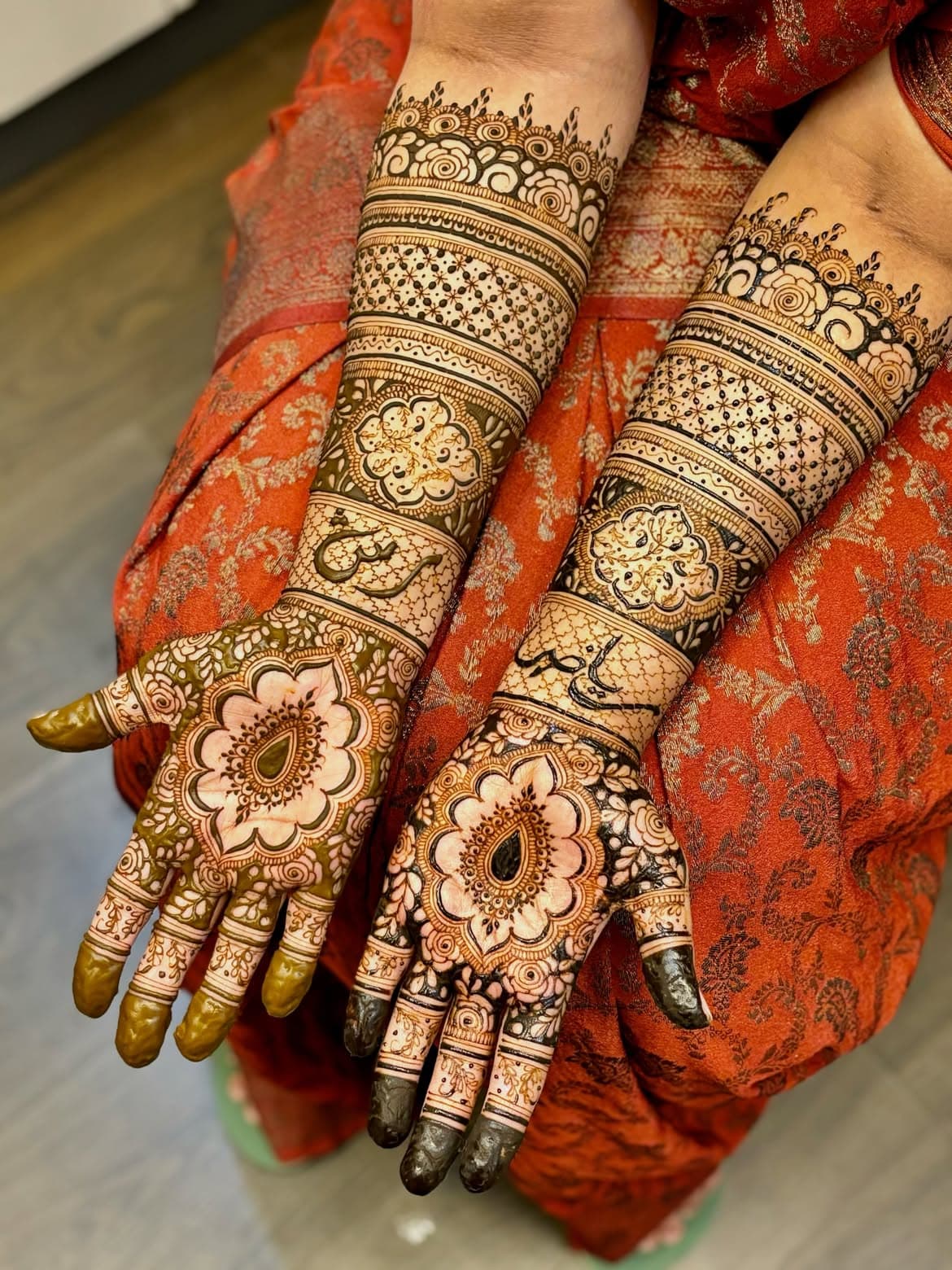


Few things are as satisfying as a deep, rich bridal mehndi, and few things are as disappointing as a pale orange one. The good news is that the colour depends less on luck than on preparation, timing and the first two days of aftercare. Here is what makes the difference.
Start with good, natural henna
A good stain starts with good paste. Natural henna is made from henna powder mixed with liquids such as lemon juice, water and essential oils. It stains orange at first and darkens to a deep reddish brown over the next day or two.
Avoid "black henna". Pastes that stain black instantly often contain a chemical dye called PPD, which can cause serious skin reactions. A good mehndi artist will use natural henna and be happy to tell you what is in their paste. If you have sensitive skin, ask for a small patch test a few weeks before the wedding.
Get the timing right
Henna takes 24 to 48 hours to reach its darkest colour. That is why most brides have their mehndi one or two days before the wedding, not on the morning itself. Plan your mehndi function so the stain peaks on the wedding day.
Before the mehndi
- Exfoliate a day before. Gently scrub your hands and feet so the henna reaches fresh skin.
- Finish waxing, manicures and pedicures first. Do them a day or two before mehndi. Afterwards they will lift the colour.
- Arrive with clean, dry skin. Skip lotion and oil on the day, as they stop the henna from soaking in.
- Use the washroom first. Bridal mehndi takes several hours, and you won't be able to use your hands.
While the paste is on
- Keep it on as long as you can. At least six to eight hours, and overnight if possible. The longer the paste stays on, the deeper the stain.
- Seal it. Once the paste starts to dry, dab on a mixture of lemon juice and sugar with a cotton ball. It helps the paste stick to your skin and stay moist. Don't soak it; a light dab every so often is enough.
- Stay warm. Henna stains better on warm skin. Avoid sitting directly under a cold air conditioner.
- Protect it overnight. Some brides wrap their hands loosely in tissue or cotton cloth so the paste doesn't smudge while they sleep.
Taking the paste off
Don't wash it off. Scrape the dried paste away gently with the back of a butter knife or your fingernails. Washing with water at this stage stops the colour developing.
Some people then rub in a little coconut oil, mustard oil or a lip balm to protect the stain. It can also help soften any dry flakes of paste.
The first 48 hours: what to avoid
- Water, for at least 12 to 24 hours. The colour is still developing. If you have to wash your hands, apply oil or balm first as a barrier.
- Soap, sanitiser and harsh cleaners. They pull colour out of the skin.
- Swimming pools and hot tubs. Chlorine fades henna quickly.
- Scrubbing and exfoliating. Anything that removes the top layer of skin removes the stain with it.
- Cooking and cleaning. Let someone else take over. Hot water, spices and detergents all fade mehndi.
Why mehndi stains differently on different people
Palms and the soles of the feet stain darkest because the skin there is thicker. The backs of hands and arms usually stain lighter. Body temperature, skin type and even hydration make a difference, so don't compare your stain with someone else's.
Making it last
A good henna stain usually lasts one to three weeks, fading gradually as your skin renews. To keep it looking good for longer, moisturise regularly and wear gloves when washing dishes or cleaning.
Find a mehndi artist on WedVue
Browse mehndi artists on WedVue, look at photos of their stains as well as their designs, and ask what goes into their paste before you book.