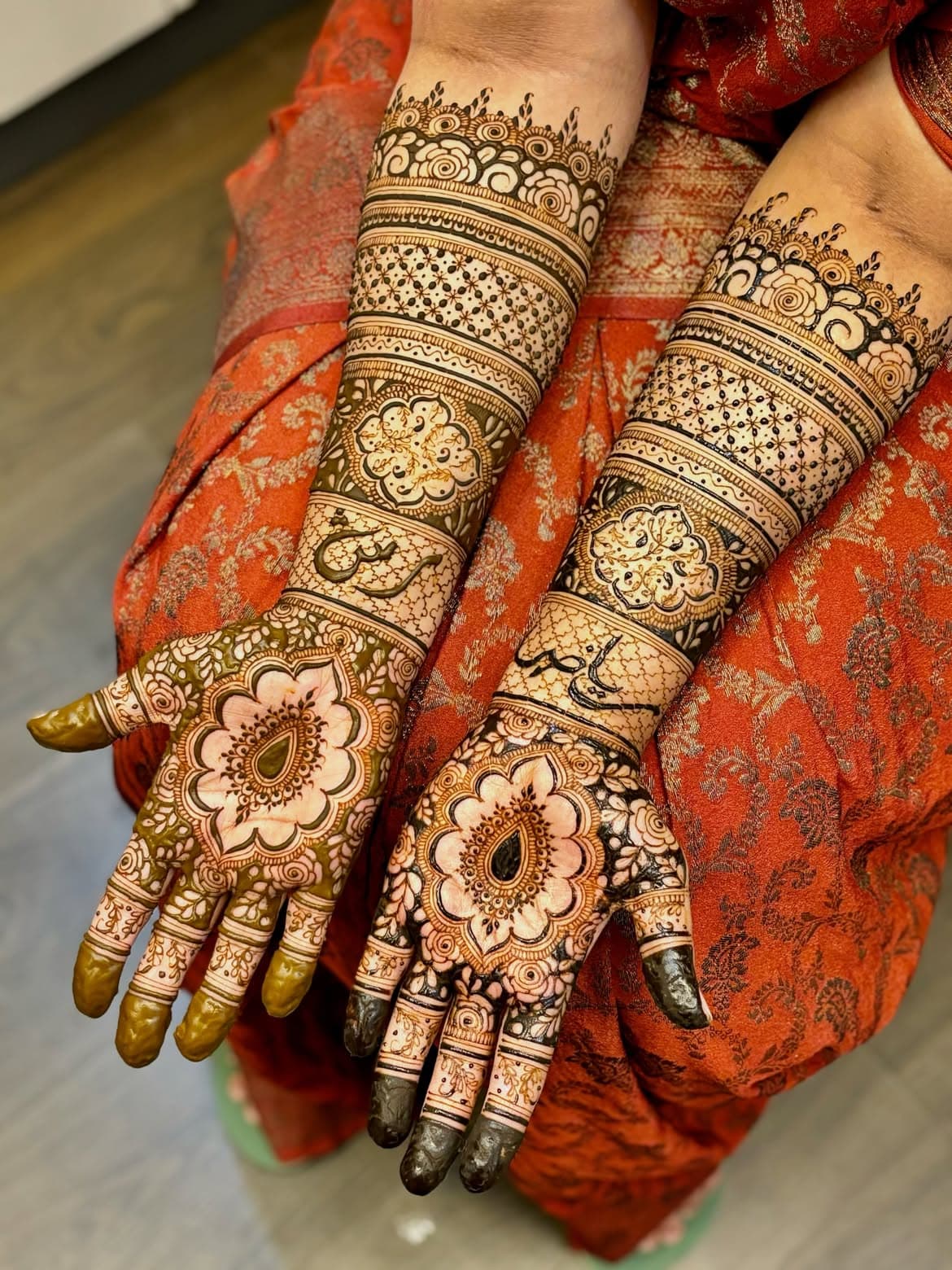


Of all the wedding functions, the mehndi is often the one guests remember most fondly. It is relaxed, colourful and full of music, and it brings the women of both families together. It also has a practical side that is easy to get wrong: the bride sits still for hours, guests queue for mehndi, and nobody can eat with wet hands. Here is how to plan one that works.
Set the date and timing
Henna takes a day or two to reach its darkest colour, so hold the mehndi one or two days before the wedding. Plan the bride's session first:
- Bridal mehndi takes time. Full hands and feet can take four to six hours or more, depending on the design.
- Start the bride early. Many brides begin in the afternoon, before guests arrive, so the main design is finished or nearly finished when the party starts.
- Leave the paste on overnight. Schedule the function so the bride can go to bed with the paste still on.
Book enough mehndi artists
This is the most common mistake. One artist cannot do the bride's mehndi and fifty guests as well.
- Book a lead artist for the bride, plus helpers for guests.
- Ask how many guests each helper can cover per hour for a simple design, and plan your numbers from there.
- Agree on the guest design in advance: a small motif on one palm keeps the queue moving.
- Prioritise close family, then open it to other guests.
- Confirm whether the artists bring their own cones, how many, and whether the paste is natural henna.
Set up the space
- A comfortable seat for the bride, with back support, cushions and a footrest. She'll be there for hours.
- A separate mehndi corner for guests with low seating, good lighting and tables for the artists.
- Fans or good ventilation, but not cold air blowing straight at the mehndi.
- Tissues, cotton and lemon-sugar mix nearby to seal the designs.
- A spot for photos with a simple, colourful backdrop and good light.
Music and entertainment
Music sets the mood. You have a few options:
- A DJ or playlist with a mix of old favourites and dance numbers.
- Live dholak or folk singers for a traditional feel, with family joining in.
- Family performances planned in advance by cousins and friends.
Keep the music loud enough to dance to but not so loud that people sitting for mehndi can't talk. Many families start soft while mehndi is being applied and turn it up later in the evening.
Food that works with wet hands
Half your guests will have mehndi on at least one hand, so plan food that's easy to eat:
- Bite-sized snacks and finger food that can be eaten with one hand
- Food served on sticks, in small cups or in cones
- Drinks with straws
- Someone assigned to feed the bride, often a sister or close friend
Chaat counters and live stations are popular, but make sure there are helpers to serve guests who can't use their hands.
Decor and colour
Mehndi decor is usually bright and informal: marigolds, colourful drapes, floor cushions, umbrellas and fairy lights. Green, yellow, orange and pink are traditional choices. Keep it comfortable rather than formal.
Little touches guests love
- Small favours such as bangles, mini potlis or tiny bottles of attar
- A board explaining the meaning of the bride's mehndi design
- Hiding the groom's name or initials in the design for him to find later
A simple mehndi night timeline
- Afternoon: The bride's mehndi begins.
- Early evening: Guests arrive, snacks and drinks are served, and guest mehndi starts.
- Evening: Music, performances and dancing.
- Late evening: Dinner, then the bride rests with her mehndi on.
Book your mehndi night team on WedVue
Find mehndi artists and DJs on WedVue, compare their portfolios and message them to check availability for your date.